10-second summary:
- You can approach plastic surgery PPC from two angles: capturing demand with Google ads as people search, and nurturing demand by raising awareness about your procedures via social media ads.
- Utilise geotargeting options to make sure your ads are only shown in locations within a set radius of your clinic.
- There are tight regulations regarding the promotion of plastic surgery via PPC – and the rules differ for each platform. Be prepared to read up.
- Embrace specificity: it’s usually more effective to promote individual treatments rather than your clinic in general.
- Utilise social proof – such as testimonials from previous clients – to help establish credibility in your treatments.
Done correctly, plastic surgery PPC can be spectacularly lucrative. Here are some tips for success.
You want to grow your clinic. You want to ratchet up your revenue. You want a more predictable flow of clients coming through your doors.
Well-managed PPC campaigns can make that happen.
Here are 13 tips for plastic surgery PPC campaigns that get transformative results for your clinic.
Before we begin, do you like the sound of 5.8x ROI?
The whole point of PPC is ROI. At least, that’s the approach we take for our clients. Here at Adbetter we help cosmetic businesses generate huge profits – just take a look at how we achieved 5.8x ROI for KP Surgical. Book a free strategy call and let us explain how we can drive profits for your clinic too. And with our performance pricing, our fees are tied to the results we deliver.
“Adbetter have proven to be a rare find – an agency that focuses on ROI for their clients as opposed to metrics that may or may not impact your bottom line. The team are solely focused on returns for their clients and are methodical and iterative in their approach, which is exactly what you want from a competent digital marketing agency.”
– Steve Whitehouse, Patient Facilitator, KP Surgical
1. Choose the right PPC platform for plastic surgery ads
You can approach plastic surgery PPC from two angles: either capturing demand for your business or generating demand for your business. (Or both.)
With Google search ads you can get your clinic in front of people at the precise moment they are searching for treatments that you provide – capturing people who are expressing demand for your treatments. This is seriously low hanging fruit. And if you aren’t grabbing it, your competitors might instead.
The other option is to use social media platforms – such as Facebook, Instagram and TikTok – to serve pay per click ads that raise awareness of your treatments, generating demand among people who are likely to be interested.
Social channels can be surprisingly effective at driving awareness of your services.Research from PwC has shown that 80% of people use social media to find health information. And one-in-four internet users turn to social media to research healthcare decisions.
2. Target your audience by location
When it comes to advertising your plastic surgery clinic, there’s no point serving your ads to people in Michigan if you’re based in Massachusetts. All pay per click platforms enable you to specify locations where your ads will be served. You can even set your ads to display only to people within a 10km radius of your clinic.
3. Zero in on your target audience
Geolocation isn’t the only thing you can work into your audience targeting. Whichever pay per click platforms you choose to advertise on, you will have access to a suite of sophisticated audience profiling tools. Target across a huge selection of variables including:
- Age
- Gender
- Hobbies and interests
- Occupation and income
- Relationship status
- Online browsing activity
…and a whole lot more.
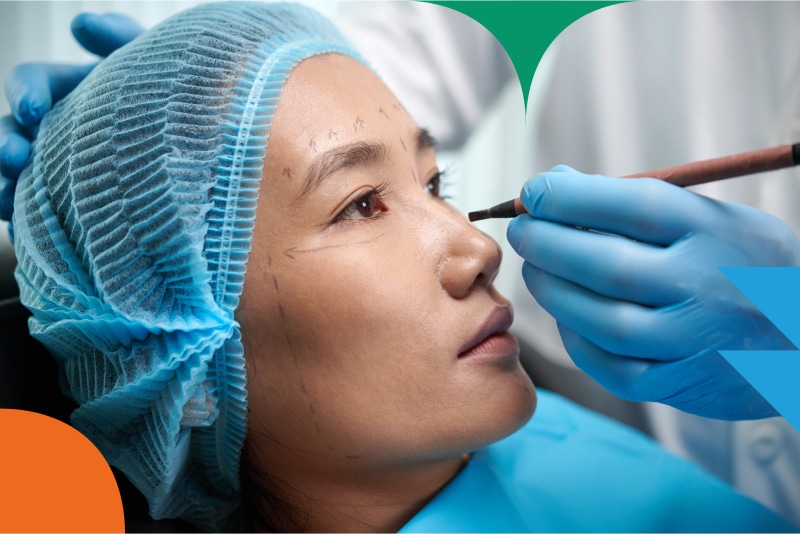
You can also feed your existing customer data into your pay per click platform and let the algorithm find a new audience to advertise to based on characteristics they share with your existing customers. Just look for the lookalike audiences function.
These audience profiling tools will help to make sure your ads are served only to the people who have a high likelihood of being interested in your clinical procedures – helping to keep your campaign spend as efficient as possible.
4. Read up on the regulations
As you are most likely already aware, there’s lots of red tape when it comes to advertising surgical procedures.
Here’s a (very) quick run through of some of the key regulations to be aware of.
You cannot promote prescription-only medications
Unless you have a LegitScript certification, you can’t advertise Botox, Dysport, Xeomin, Daxxify, Jeuveau or other injectables using their brand names. These prescription-only medications can only be promoted on social media and websites by licensed pharmacies and authorised resale companies.
Be careful with your photography
Before-and-after photos have long been the go-to for healthcare marketing. But they cannot be used on the Meta platforms (Facebook and Instagram) – not even in the landing pages that your ads link to.
On platforms where you are able to advertise with before-and-after shots – such as Google and TikTok – there are strict rules about retouching of images. For instance you mustn’t edit any part of the image that relates to the treatment being promoted.
You should also avoid any graphic imagery, such as needles or blood, which could get your advertising account frozen.
Check your language
Clarity of language is a huge deal when promoting plastic surgery procedures. You must accurately describe the treatments you are promoting, rather than using colloquialisms.
You should also take care to avoid language that could be perceived as playing on insecurities. And no unrealistic claims – such as: “it will take 20 years off!” Read up on the official guidelines below.
5. Embrace specificity
The most successful PPC ads tend to be those that are highly targeted. Not least because Google rewards relevance. You should consider creating separate campaigns for each of the key products or treatments that you want to promote. These ads should drive traffic to landing pages that are unique to each ad.
A nuanced approach tends to work best for your social media advertising too. Promoting specific treatments or products – with separate campaigns for each – rather than promoting your clinic in general allows you to zero in on highly targeted audiences. And that’s likely to enhance your campaign performance.
6. Make sure your branding is on point
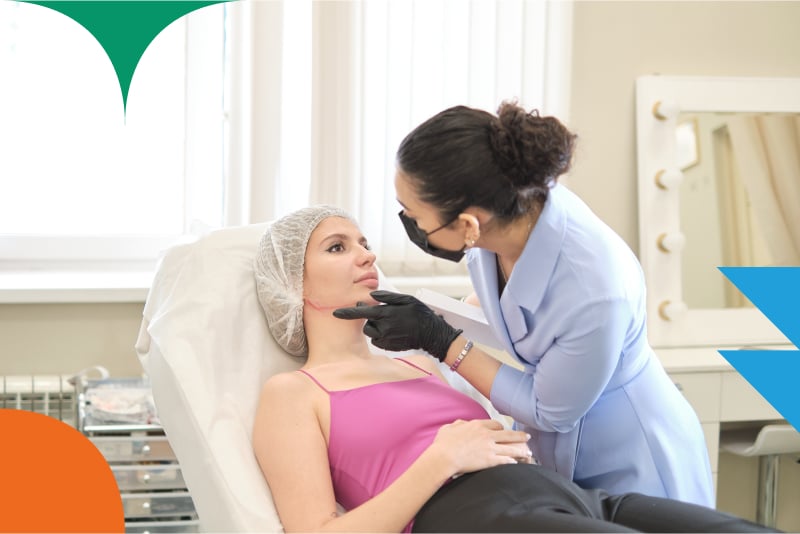
Most people are rightly discerning when it comes to making choices about their health. Your branding has to give the perception of a clinic that’s professional, credible and – most importantly – safe. In the eyes of your audience, sloppy branding equals sloppy service.
7. Remember your reader
Good advertising is about remembering there’s a human on the end of your message – a real person with real feelings. So before you get creative, try to put yourself in the shoes of the people who will be receiving your ads.
People visit plastic surgeons because they want a certain outcome: whether that’s physical, emotional or both. Those outcomes are the things you want to showcase in your marketing approach. It’s also good to talk about the process that certain treatments follow. Educating your audience about certain treatments can help them visualise whether it’s right for them.
Remember that many people are guarded about their health and appearance. The treatments your potential client is seeking may be connected to very personal fears and anxieties.
Oh and keep it snappy. No matter what pay per click platform you are using for your plastic surgery PPC ads, you have a second or two – sometimes less – to grab the attention of your audience. Your messaging must be crystal clear.
8. Showcase your credentials
When it comes to plastic surgery PPC, your ability to demonstrate your expertise is always going to be well received. Your qualifications, certifications, awards or membership of relevant industry bodies should be clearly signposted.
9. Embrace social proof
Testimonials from previous clients can be particularly persuasive with plastic surgery PPC. Anything that helps to reduce uncertainty in your audience and bring more clarity to the decision-making process will work in your favour.
Try to elicit client testimonials that feel natural, authentic and unforced. Both written and video testimonials can work well. But for the latter, consider positioning the camera off to the side. It feels more natural and less forced than when the subject is staring straight down the lens.
Bonus points if you can prompt your clients in a way that allows them to reveal how your care and expertise helped to overcome their obstacles or doubts before obtaining the desired results.
10. Think beyond the first click
As mentioned, you should have specific landing pages for each of your plastic surgery PPC campaigns. Landing pages are a separate science. But here’s a super-speedy rundown of the key considerations.
- Design and copywriting. Your landing page should feel like a continuation of the ad your visitor has clicked. Make sure the layout is optimised for mobile and features a compelling proposition above the fold.
- Create a closed journey. Single-mindedness is a strength when it comes to landing pages. Limit the navigation options and stay focused on one clear call to action. There should only be one click your visitor can make: the action you want them to take.
- Utilise social proof and trust signals. Again, use customer testimonials to build credibility and trust in your company. Clearly signpost any industry accreditations, qualifications or awards.
- Gather data. This is key, it warrants its own paragraph below these bullet points.
- Be aware of data privacy regulations. If you are acquiring leads in California, Virginia or Colorado, you must comply with their respective data privacy laws.
Okay, data gathering.
The main aim of your landing page is to collect info on your leads. For plastic surgery PPC you can get results by creating a form on your landing page that prompts your lead to choose their own diagnostic path.

Ask questions about your lead’s desired treatment. Then you can guide them towards the most appropriate course of action.
This has the dual benefit of giving your sales team key insight on each of your leads and their motivations – making it easier to nurture them towards conversion. It also signals to your potential clients that you are serious about personalising their clinical outcomes.
11. Don’t be afraid to experiment
From the words you use to the images you choose, your pay per click platform will give you the option to submit multiple variants for each constituent part of your ad.
No doubt, that’s an opportunity you should take!
Your platform will measure the performance of the different copy and image combinations – then preferentially serve the ad variants that generate the highest engagement and are most likely to drive the right outcomes for your clinic.
12. Get serious about performance tracking
When you run pay per click campaigns, you get instant feedback on how your ads are performing. As this data accumulates, you have the opportunity to find trends that reveal the ad strategies that get the best results – iterating your ads and optimising for success.
Yet, insight on what’s happening within the pay per click environment is just the start. To drive the really BIG results with your plastic surgery PPC, you need to be able to track all points in your customer acquisition journey, from first click to first booking and beyond.
Why implementing Facebook Conversions API (CAPI) is crucial for advertisers
This requires getting your performance tracking set up to provide full visibility into onward KPIs from your ad – such as inbound enquiries, consultations booked and revenue generated. And that’s not easy.
Which is why you should consider…
13. Working with an expert
It’s no overstatement to say that lead generation for healthcare can help you generate millions of dollars of revenue. But it takes time. Tenacity. Expertise.
As experts in pay per click advertising, we can get you there faster. We know the plastic surgery PPC tactics that get results. We know what levers to pull and when to pull them. And we can manage everything on your behalf – sharing our progress with clear dashboards and monthly reporting.
Sounds good? Book a free strategy call. We’ll lay out the results you could expect in the first three months of working with us. And with our performance pricing, our fees are tied to the results we deliver. Let’s get started.
You may also be interested in:
Learn how to promote different treatments:
- How to transform your revenue with plastic surgery ads
- Facebook ads for plastic surgeons: big opportunities, big regulations
- How to maximise revenue from your liposuction advertising
- Body contouring ads: 11 tips for consistent ROI
- Supersize your revenue with pay per click CoolSculpting ads
Or learn more about the essentials of successful lead generation:
- Getting results from Google display ads for lead generation
- The no-fluff guide to Facebook ads for lead generation
- Lead generation for doctors: the undeniable benefits of PPC
- (Almost) everything we know about winning big with aesthetics PPC
- Aesthetics advertising: the obstacles and how to avoid them
- Is TikTok good for lead generation?